
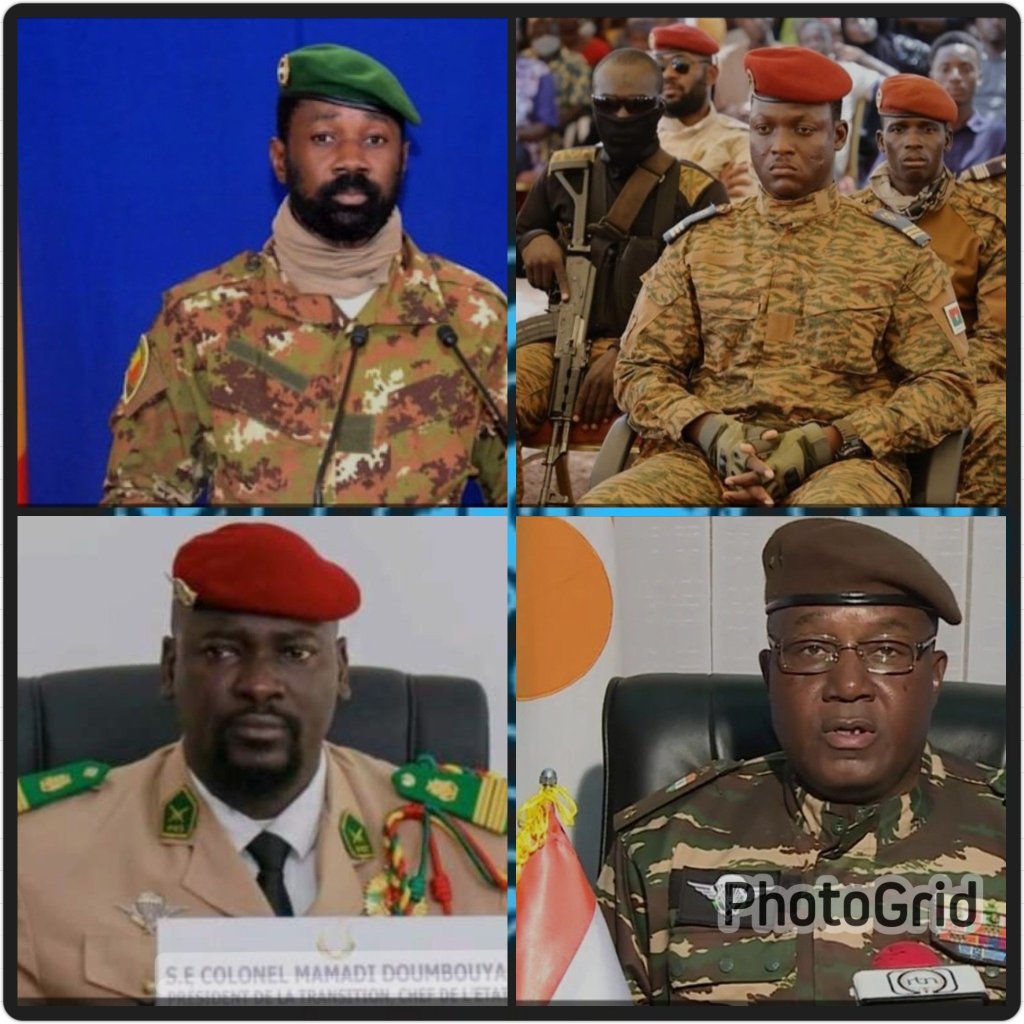
The recent spate of military coups in West and central Africa have been received with mixed reactions among Africans both at home and in the diaspora. Should coups be tolerated, embraced, or even celebrated or should they be condemned indiscriminately?
No doubt, military coups are an impediment to sustaining a representative democratic culture as was aspired to by African countries at independence. But what is democratic in the African context? What we witness time and again is incumbent civilian presidents manipulating constitutions, violating term limits, targeting, and abusing their opponents and perpetually constricting the democratic space thereby eliminating citizens’ rights to express their views freely to hold their leaders accountable.
In continental Africa, the first military takeover of modern state power took place in Egypt in July 1953. The coup ended constitutional monarchy in Egypt and secured a republic, it also ended British occupation of the country and brought Gamal Abdel Nasser to the forefront of Egyptian politics, today he is hailed as one of the great African visionaries that emerged to end colonialism and set a course for independence.
Sub-Saharan Africa would witness its first coup about a decade later when in 1963 Togolese president Sylvanus Olympio was toppled. Since then, coups would seem to have become a normal part of statecraft in Sub-Saharan Africa.
West Africa’s powerhouse, Nigeria, would experience its first coup in 1966 and would have successive military governments until the ouster of Gen. Sani Abacha who was deposed in 1998.
When Abacha’s successor Gen. Abdulsalami Abubakar took over, he led a transition to civilian rule within one year. In the subsequent elections at the end of that year, Gen. Olusegun Obasanjo, one time military leader of Nigeria won the elections and returned to power as a civilian, he worked to consolidate democratic institutions and Nigeria has since kept the military away from the state machinery and Nigeria’s direction would change towards more stability. Nigeria is by no means a perfect democracy, far from it, but with renewed hope in state institutions and the tradition of peaceful transfers of power witnessed in those years, Nigeria has remained largely stable as far as military takeovers are concerned, so strengthening state institutions works.
The reasons that are advanced by the military as excuses for their coup are varied, but corruption, mismanagement of public funds, self-perpetuation in power are the chief complaints. On the face of it, these are not justification enough to usurp power from civilians, suspend constitutions and rule over citizens without their prior consent.
Unfortunately for us, the issue is either black or white. One is either for coups (against representative democracy) or against coups (in support of representative democracy), the justifications or the situation of the country under an elected executive does not matter. It is not that simple.
Teodoro Obiang Nguema Mbasogo came to power in Equatorial Guinea in August of 1979 through a military coup and he is still the leader of that country almost forty five years later. In 2016, he appointed his son Teodoro Nguema Obiang Mangue as Vice President of that country in a clear plan of succession, not unlike the case of neighboring Gabon. When Omar Bongo Ondimba took power in December 1967, he remained president of Gabon until his death in June 2008 when his son Ali Bongo Ondimba took over. Can we argue that the citizens of Gabon and Equatorial Guinea really have a say in how their lives are managed? Can we really say that a ‘democratic’ process would ever lead to change for the people of these two countries? The answer is a resounding no.
There are no state institutions in either of these two countries, the citizens’ rights are subject to the whims of these ‘democratic’ tyrants. Merely expressing your views on how hard life is for you is a criminal offense, how else can such citizens exercise their power to hold their leaders accountable, or do they deserve to live under such conditions?
These two countries are just two examples of the multitudes of African countries where restitutive coups may not be such a bad idea.
The claim that military leaders turn out to be worse than the civilian leaders they depose and therefore such ‘democratic’ tyrants should be kept in place while they visit all manner of abuse upon their citizens is fatalistic and inconsiderate of the sufferings that our brothers and sisters across the continent are forced to endure.
Arguing that Gambians should not support coups considering what we went through under Jammeh is childish argument devoid of substance. Why must Jammeh be the yardstick for when a coup is justified or how its leader would turn out to be? It would be hard to argue that Captain Thomas Sankara was bad for Burkina Faso, but in contrast we know how Blaise Compaoré turned out. Besides, were we not all silently praying that the December 30, 2014, coup attempt was successful because at the time we saw no viable democratic pathway to end Jammeh’s self-declared “billion year” rule. Why should our despair be good enough to wish for a coup, but the Gabonese people cannot celebrate the palace coup that ended 55 years of one family rule in a country that is not designated a monarchy?
The fact of the matter is, coups can be averted when we build strong institutions, respect the rights of citizens, and end the persecution of political opponents or weaponizing state institutions. Desperate people resort to desperate means to alleviate their suffering. “Those who make peaceful revolution impossible will make violent revolution inevitable” – JFK.
In most of the countries concerned, citizens’ rights are abused using constitutional instruments, the police selectively enforce the law, the courts selectively prosecute similar cases based on who is an ally of the state, and state institutions are non-existent or grossly dysfunctional while blatant corruption and misappropriation of public funds imposes dire economic conditions on the people. Such an environment cultivates people who have no faith in the electoral process, see no hope of change and are powerless to act through the only other alternative for change which is popular protest because there are laws that criminalize such mobilization.
Another option is mass uprisings, the onset of civil strife with mass casualties, as we saw in Liberia, Rwanda, and Sierra Leone in the 90s. When soldiers pick up arms, civilians flee, but when civilians take up arms, no one is safe and, in an environment, where citizens have no avenue for redress or to effect peaceful change, the military intervening would not be such a bad idea in such situations.
Yes, Coups are not the ideal form of change, and like all things, they are not all bad or all good, but in some cases, they offer an opportunity for a reset. Our only salvation as a people is to stand for strong institutions so that concerned citizens can have some hope of redress through such institutions as independent courts.
The sooner African leaders, especially West African leaders wake up to the reality that the military is always an option for a distressed citizenry and start creating avenues for dissent and respecting their constitutions, the better it would be for all concerned. Otherwise the spate of coups would continue and they will always be received with relief in some quarters even if briefly so.

 Mankajang