
Are Gambian voters moved by issues?
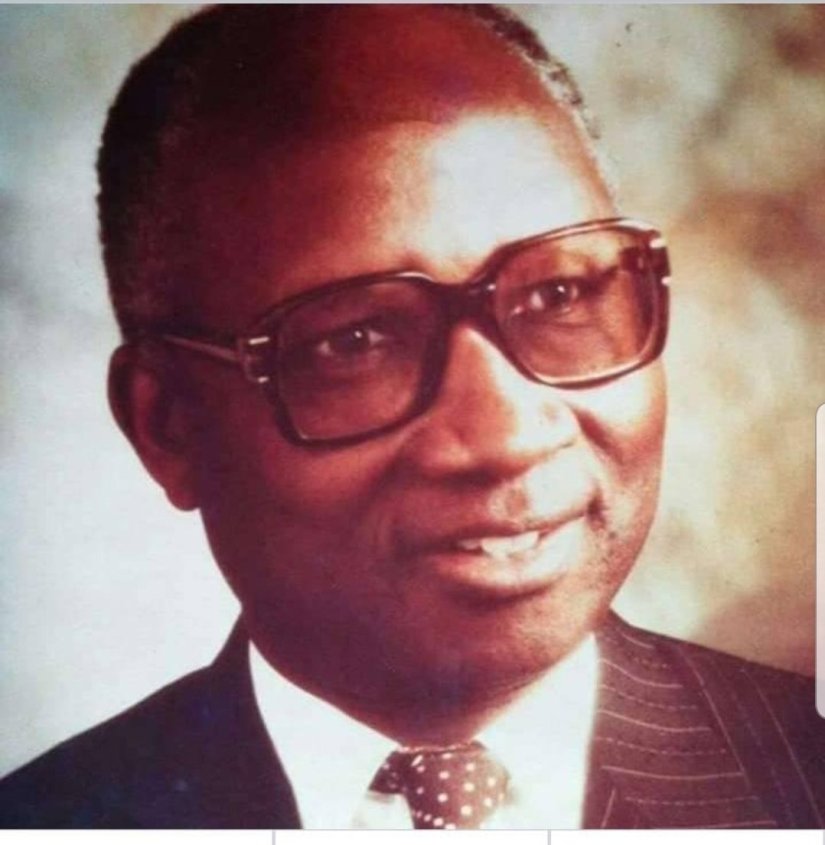
In July 1986, a new political party; the People’s Democratic Organization for Independence and Socialism (PDOIS) hit the political stands of The Gambia. By this date, The Gambia had been independent from British colonial rule for just over two decades.
Since the country became independent in February 1965 one man, Sir Dawda Kairaba Jawara served as its leader until he was toppled in July 1994. Before the first presidential elections were held in 1982, The Gambia operated a parliamentary system of government where the party with the majority of seats in parliament chose the president of the country. As leader of the People’s Progressive Party (PPP), which had the highest number of seats in parliament, Sir Dawda became that leader chosen to lead the country.
After winning the independence vote, the PPP maintained their majority in the subsequent House of Representatives elections of 1966, 1972, and 1977 as well as the 1970 plebiscite in which the party advocated for and won the vote for the Gambia to become a republic.
The only challenger of note for most of this period was the United Party (UP) of P. S. Njie, who saw a decline in the number of seats every election cycle.
Following its founding in 1975, the National Convention Party (NCP) of Sheriff Mustapha Dibba, formerly Vice President of the republic, became the leading opposition contender against the PPP in the 1977 House of Representatives elections.
Five years later, in 1982, The Gambia held its first presidential elections, Sir Dawda was returned as president with 72 percent of the votes as opposed to Sheriff Mustapha Dibba’s 27 per cent.
Similar trends will be repeated in 1987 and 1992. Even though Sir Dawda’s percentage dropped, he still won well over 50 percent of the votes in those two elections.
The military coup of Yaya Jammeh took place on July 22nd, 1994, ending Sir Dawda’s long stint as Gambia’s leader.
Sir Dawda was a democrat in every sense of the word. Despite the many shortfalls of his administration, he was a charismatic and effective leader, highly educated and earned the respect of his peers from much larger and more important states in terms of global geopolitics. The Gambia was hailed as one of Africa’s only true democracies alongside Botswana.
It is understandable therefore, that despite the quality candidates that challenged him, he remained a darling of the people.
With the coup, the political parties of the old republic were effectively ousted as well. The PDOIS was the sole exception, initially.
The newly formed party contested its first elections when they fielded candidates in the 1987 parliamentary elections but did not win any of the five seats they vied for. All its candidates in the 1992 elections were defeated yet again.
The party presented Sidia Jatta as candidate in their first, albeit unsuccessful presidential bid in 1992.
When the military transition that started in 1994 was over, the party saw the need to challenge the new dispensation and opposed the soldier turned civilian presidential bid of Yaya Jammeh in the 1996 polls. In that first election after the coup, Sidia Jatta was presented as candidate and in 2001, before Halifa Sallah assumed the role. In 2006, he contested as the leader of the NADD alliance.
This historical background is relevant to the arguments I seek to advance in this piece as we build up to the stakes in 2026 and the current crisis within the UDP, the party with the greatest potential to effect change.
We often hear the claim that with Halifa Sallah as an option, Adama Barrow should not have been selected in 2016 as the candidate of the coalition that ousted Jammeh. Fair enough, on the face of it. But the circumstances that led to the emergence of Adama Barrow are hardly ever mentioned or factored into the equation.
And that is the argument in this piece. With exceptions noted, are we issue-based voters or personality focused voters?
This historical narrative is to argue that Halifa Sallah, and his party PDOIS, have always presented themselves as alternatives, first to Sir Dawda, then to Yaya Jammeh. They had always carried the same fundamental message for the Gambian voter in terms of governance, and the roles and responsibilities of the citizens as well as those entrusted with power. While many recognize them as men of integrity, the admiration never turned into substantial enough votes.
Granted, they only contested once against Sir Dawda. But they have always been there opposed to Jammeh’s excesses and poor governance method.
PDOIS is used here purely as a reference point due to their long years of being present on the political stage and their messaging. Politics is never a single issue endeavor and this is neither an endorsement nor a rejection of PDOIS as a political entity.
With the second republic coming into effect, a new entrant came on the stage to join the PDOIS in opposition. That party, the United Democratic Party (UDP) came to the scene in August 1996 barely a month to the elections held that year to challenge Jammeh.
The UDP presented Ousainou Darboe, a lawyer by training and a doyen of the Gambian bar.
Between these prominent figures, Sidia Jatta, then Halifa Sallah both of PDOIS, Lawyer Darboe as he is known, backed by the principals of the parties of the first republic that were banned, namely the PPP, the NCP, and Assan Musa Camara’s Gambia People’s Party (GPP), the Gambian people had citizens of high standing in society presented to them as choices against a military leader turned civilian and somehow, we chose the junta leader who just turned thirty with only a high school diploma, and kept returning him to power every election cycle for two decades, despite his increasing abuses and violations of our collective rights and dignities.
There was also the moral issue. Despite reneging over his promise to return to barracks after a two year transition and the ever present threat of a counter coup, people were enamored by the military fatigue, the tough talking bravado, and the claims of “rapid development.”
This was also at a time when Liberia and Sierra Leane were in the grip of a brutal civil war triggered by military involvement in politics. Security and fear of a replica of those conditions should have been top of mind for the Gambian voters, or so one would assume. In fact, as predicted by many, there was an attempted counter coup on November 11th, 1994, that was foiled and those suspected of involvement were summarily executed. Two months later, there was the fallout between Jammeh and his number 2, Vice Chairman Lt. Sana Sabally in January 1995, leading to the arrest of the later alongside the then Spokesman of the Junta Lt. Sadibou Hydara.
These incidents should have raised concerns over the risks associated with retaining a military government even if the soldiers discarded their uniforms.
The campaign period leading up to the 1996 elections and the fear tactics as well as open barbarity meted out to opposition elements should also have been enough to alert Gambians to the real danger they were about to step into. But in 1996, despite those threats of insecurity, abuse of rights and the use of violence against citizens for political ends, Jammeh was elected to serve as president, preferred over the more prominent citizens of good standing.
Immediately following his election in September 1996, an armed attack was launched on the Farafenni military barracks on November 8th, 1996, where at least five soldiers were killed in an attempt to steal arms as a first step towards launching an assault against Banjul with aims of toppling Jammeh by force of arms. That attempt was foiled. It woud not be the last.
In July 1997, less than a year later, a similar attack was launched on the Kartong Military camp by ex-soldiers of the Gambia National Army with similar aims of stealing arms with the ultimate goal of overthrowing the government of Jammeh.
With every episode, fear gripped the citizenry and the ever increasing number of military check points with heavily armed combat ready soldiers did not help matters at all. But the fear, the insecurity, the constant threat of armed conflict, and the open abuse of innocent citizens was not enough to sway Gambian voters from retaining Jammeh when the next election cycle came around.
Within that same period (first elected term of Jammeh), Gambians witnessed what was definitely the worst atrocity ever committed on Gambian soil up to that point, and since. The cold blooded mass murder of protesting school children on April 10th and 11th 2000 was an unprecedented case of brutality.
To make matters worse, those complicit within the security forces were issued indemnities through an act of parliament, a rubber stamp one needless to say. This act alone should have sealed Jammeh’s fate and resulted in his ouster in the elections that followed a little over one year later in October 2001. Yet again, he won with 52% of the votes that year.
Beyond that, it appeared Jammeh could get away with any atrocity and would still be rewarded. Children are sacred and should be protected by all. At the very least if we fail to protect them, we should make sure justice was served on their behalf. But not for Jammeh, despite the loud protests and messages at political rallies, the rivals were snubbed, and he was returned to power yet again.
Between 2001 and 2006, dozens of West African migrants were arrested and murdered in the dark of night without trial because they were suspected of being mercenaries. A journalist disappeared never to be heard from again up to this day. Another prominent journalist was shot and killed by agents of the state, a defense lawyer was shot in an assassination attempt and maimed for life, newspapers and radio stations set on fire, journalists tortured and exiled, but Jammeh was re-elected again in 2006.
More crimes awaited Gambians between 2006 and 2011. Between 2011 and 2016, it was no different, in fact Jammeh got more brazen in his abuse of state power and abuse of citizens he did not like or perceived as threats.
Prisoners serving jail terms already decided by the courts were dragged from their cells in the middle of the night to be summarily executed in a move many viewed as ritualistic killing done to appease Jammeh’s occult beliefs. Elderly citizens were stripped naked and forced to drink hallucinogenic concoctions because Jammeh was seeking to identify witches. None of those issues moved the needed against Jammeh.
By now you have observed the pattern. A five year cycle of abuse and rights violations followed by a new mandate at the polls. From illegal arrests and detentions, to disappearances, extra judicial killings and every abuse imaginable in between, Gambians were subjected to tyranny in all its facets, yet every opportunity they got to rid themselves of such a menace, they were seen in the streets dancing and singing alongside his expensive convoy of cars in massive crowds campaigning to get him re-elected to power, and every time, he was successful.
So, we have to ask ourselves, do we care about issues plaguing us as much as we care about personalities?
When Jammeh was finally ousted in 2016 with a very small margin through a coalition of opposition parties, the new government has registered many failures, yet the familiar pattern of rewarding failure can be observed.
In the next installment we will take a look at how the current government broke every promise they made, failed in governance by every metric and yet commanded significant support from the voting population.
To be continued…
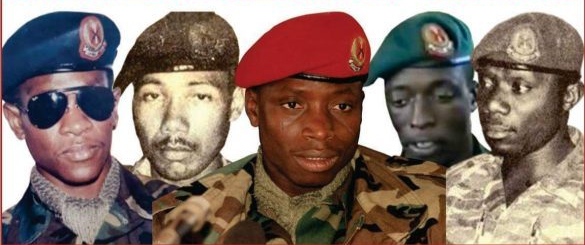
L-R Lt. Sana B. Sabally, Lt. Edward Singhateh, Lt. Yaya Jammeh, Lt. Yankuba Touray, Lt. Sadibou Hydara

 Mankajang
1 thought on “Buildup to 2026”